WeVisForensics: New AI Spots Fake Videos with Unseen Detail
New AI tool WeVisForensics can detect fake videos with remarkable accuracy by analyzing subtle visual and audio clues, making it harder to spread misinformation.
By Sci Herald Editorial Team ·
Based on research by Yipeng Du, Yuxi Li, Ying Zhang, Chong Sun, Chen Li, Jing Lyu, Ying Tai, first posted to arXiv in November 2026 — view the original study

TL;DR: A new AI system called WeVisForensics can detect fake videos with 95.2% accuracy by learning to spot subtle visual and audio flaws that older tools miss. This technology is a crucial step in the fight against AI-generated misinformation that can look deceptively real.
Key Facts
- WeVisForensics achieved an average detection accuracy of 95.2% across multiple tests, outperforming the best previous method by 9.0%.
- The system works like a detective, coordinating a team of specialized AI "inspectors" that each look for different types of flaws, from visual glitches to audio inconsistencies.
- It uses a novel training method called DTPO that allows both the main AI and its inspector team to learn and improve together from their mistakes.
- The researchers built a new dataset, ForenCue-30K, with over 30,000 annotated video clips to train the system to recognize specific types of forensic evidence.
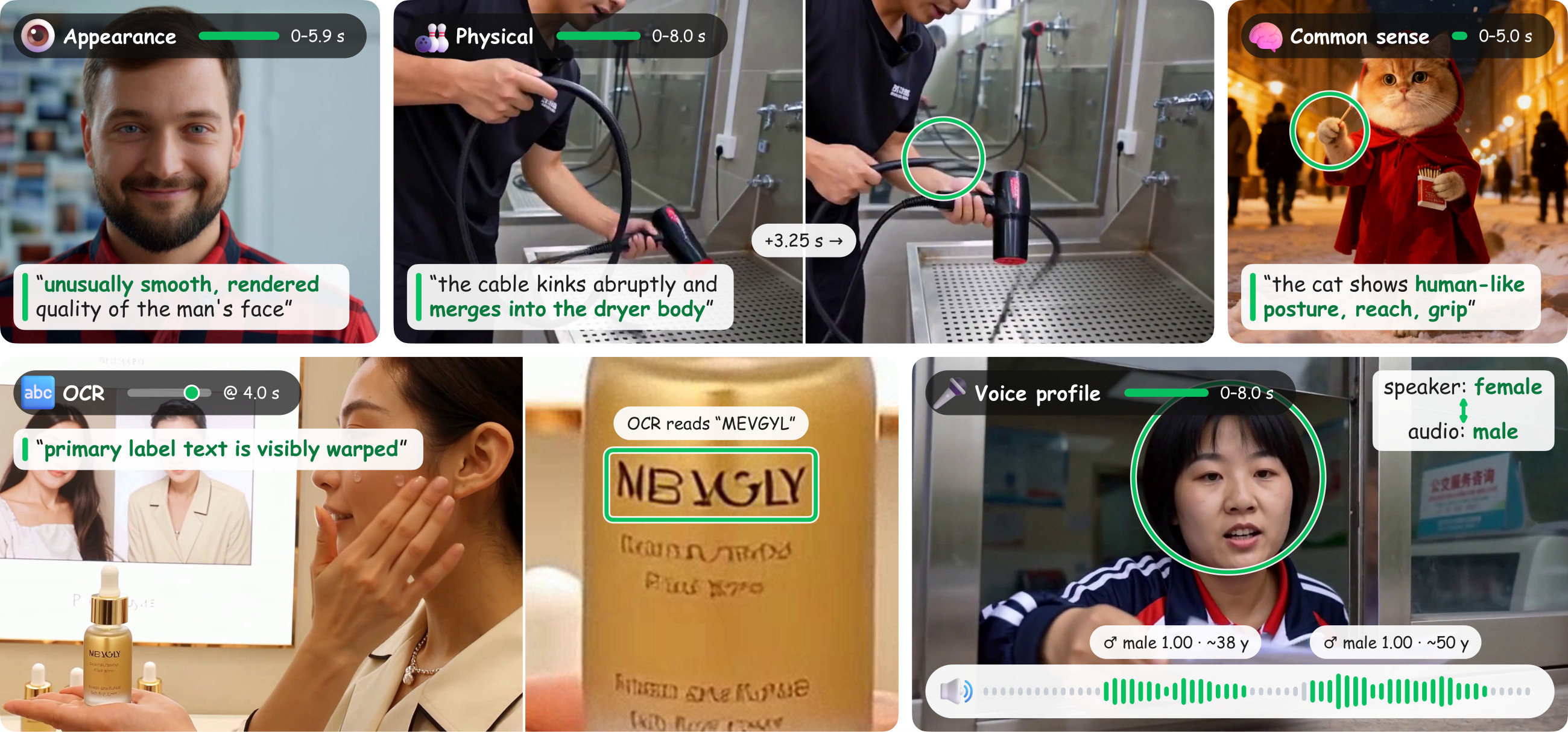
- The tool is designed to explain its decisions by pointing to the exact moments and types of flaws it finds, making its verdicts more transparent and trustworthy.
The Rise of Fake Videos and the Need for Better Detection
Imagine watching a video of a world leader saying something they never actually said, or seeing a loved one in a situation that never happened. As AI video generation tools become more advanced and accessible, this scenario is becoming increasingly common and difficult to spot. The rapid improvement in video generation has created an urgent need for equally advanced detection methods that can keep pace with synthetic content that is becoming nearly indistinguishable from reality.
This is the challenge that a research team from Nanjing University and Tencent Inc. set out to solve. Led by Yipeng Du, Yuxi Li, Ying Zhang, Chong Sun, Chen Li, Jing Lyu, and Ying Tai, the group has developed a new AI framework named WeVisForensics that takes a fundamentally different approach to spotting fake videos. Their research, first shared in November 2026, represents a significant leap forward in AI video forensics by creating a system that doesn't just make a snap judgment but actually investigates videos like a human forensic analyst would.
What is WeVisForensics and How Does It Work?
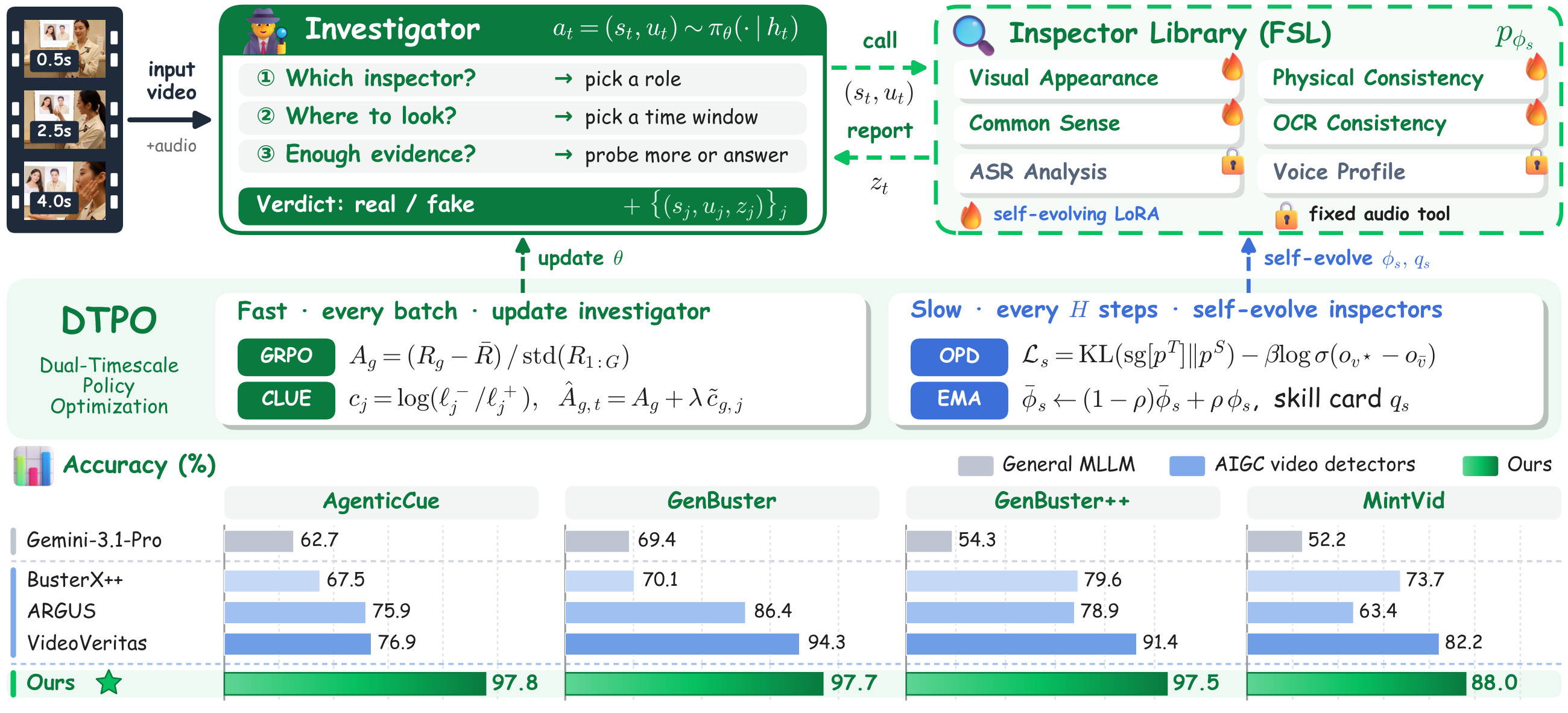
WeVisForensics is an AI system that acts like a detective coordinating a team of forensic specialists to examine videos for signs of manipulation. Unlike previous methods that either looked at a video in one quick pass or used fixed teams of experts with limited flexibility, this new system dynamically decides what to examine, when to examine it, and when it has enough evidence to reach a conclusion.
The system consists of two main components: a chief investigator AI and a team of specialized inspector AIs. The chief investigator's job is to plan the investigation—it looks at the overall video and then decides which specialist to call upon and which specific part of the video to examine. The inspector team includes experts in different areas: one checks visual appearance (looking for odd textures or lighting), another examines physical consistency (checking if movements look natural), a third looks at commonsense plausibility (does the scene make logical sense?), and others analyze on-screen text and audio tracks.

As the diagram above shows, the investigator repeatedly calls different inspectors to examine specific parts of the video, reads their reports, and builds a chain of evidence until it can reach a confident conclusion. This approach mirrors how a human forensic analyst would work—forming hypotheses, testing them with specialized tools, and collecting evidence until the picture becomes clear.
"The investigator learns which artifact type to examine, over which window, and when to conclude, and these interactions provide shared feedback for both levels of agents," Yipeng Du and colleagues write in the paper.
The Secret Sauce: How the System Learns and Improves
The real innovation in WeVisForensics isn't just its detective-like structure but how it learns to become better at its job over time. The researchers developed a novel training method called DTPO (Dual-Timescale Policy Optimization) that allows both the chief investigator and the specialist inspectors to learn and improve together.
Think of it like training a sports team: if you only train the coach on strategy but never improve the players' skills, the team's performance will eventually hit a ceiling. Similarly, if you only train the players individually without improving how they work together, you won't get optimal results. DTPO trains both the "coach" (the investigator) and the "players" (the inspectors) simultaneously but at different speeds—the investigator learns quickly from each decision it makes, while the inspectors learn more slowly from the accumulated evidence of many investigations.

This approach creates a virtuous cycle: as the investigator gets better at deciding which inspections to request, it provides better training examples for the inspectors. As the inspectors get better at spotting subtle flaws, they provide better evidence for the investigator to make decisions. The system essentially creates its own curriculum for learning, getting smarter with each investigation it conducts.
Building the Training Ground: The ForenCue-30K Dataset
To train this sophisticated system, the researchers needed a equally sophisticated training dataset. They created ForenCue-30K, a collection of over 30,000 video clips with detailed annotations that specify exactly what type of forensic evidence appears where in each video.
Previous datasets for training fake video detectors only indicated whether a video was real or fake, or provided a general explanation. ForenCue-30K goes much deeper—it labels specific types of artifacts (visual glitches, physical impossibilities, etc.) and precisely when they occur in the video. This allows each specialized inspector AI to learn specifically what to look for in its area of expertise, much like how medical students learn by examining specific cases with known diagnoses.
The dataset also includes "interaction trajectories" that show how an ideal investigation would proceed—which inspections to call in what order based on what evidence has been found so far. This helps train the chief investigator to plan effective investigations rather than just randomly requesting inspections.

How Well Does It Actually Work?
The proof of any detection system is in its accuracy, and the results for WeVisForensics are impressive. Across multiple tests including in-domain videos (similar to those it was trained on), out-of-domain videos (different from its training data), and a special agent-focused benchmark, the system achieved an average detection accuracy of 95.2%. This performance exceeds the strongest previous detection method by 9.0%—a substantial improvement in a field where even small gains are difficult to achieve.
The researchers also created a special evaluation called AgenticCue that measures not just whether the system gets the right answer, but whether it uses the right approach to get there—requesting appropriate inspections and focusing on the relevant parts of the video. This is important because a system that gets the right answer for the wrong reasons might not be trustworthy or reliable in real-world scenarios.
Perhaps most importantly, WeVisForensics doesn't just give a simple "real or fake" verdict. It provides evidence for its conclusions, pointing to the specific moments and types of flaws that led to its decision. This transparency is crucial for building trust in AI detection systems, especially when their conclusions might have significant real-world consequences.
What This Means for the Fight Against Misinformation
The development of WeVisForensics comes at a critical time when AI-generated videos are becoming increasingly convincing and accessible. The ability to detect synthetic content with high accuracy and provide transparent evidence for those detections is essential for maintaining trust in digital media.
For social media platforms, tools like WeVisForensics could help flag potentially misleading content before it goes viral. For journalists and fact-checkers, it could provide a powerful assistant for verifying questionable video content quickly and reliably. For the average internet user, it might eventually become integrated into browsers or social media apps as a background verification tool that warns users about potentially synthetic content.
However, it's important to recognize that this is an arms race—as detection methods improve, so will generation methods. Systems like WeVisForensics will need to continuously evolve to keep pace with increasingly sophisticated synthetic media. The self-improving nature of the system, where both the investigator and inspectors learn from their experiences, makes it particularly well-suited for this ongoing challenge.
The Bigger Picture
WeVisForensics represents part of a broader shift in AI research toward systems that don't just make decisions but explain how they reach them. This transparency is becoming increasingly important as AI systems are deployed in high-stakes scenarios where understanding the reasoning behind a decision is as important as the decision itself.
The approach of using multiple specialized agents working together under a coordinating agent is also appearing in other AI domains. For instance, our coverage of Route Anything: AI That Smarter Picks Tools for Faster Results explores similar concepts in tool selection, while MiniMax M3.1 Flash: 220B Parameter Multimodal AI for Coding and Agents examines large multimodal models that can handle diverse tasks.
The field of AI video generation itself is advancing rapidly, with systems like Jeveration: AI That Creates Images Super Fast pushing the boundaries of how quickly synthetic media can be produced. As these generation tools improve, detection methods must keep pace—WeVisForensics represents a significant step forward in this ongoing competition.
WeVisForensics acts like a detective that dynamically decides which experts to consult and which parts of the video to examine based on what it finds during the investigation.
Can WeVisForensics be used by ordinary people, or is it just for experts?
Currently, it's a research system that requires technical expertise to implement. However, the technology could eventually be integrated into user-friendly tools for journalists, fact-checkers, and social media platforms that need to verify video content.
Does WeVisForensics work on all types of fake videos?
It was tested on a wide variety of AI-generated videos and outperformed previous methods across different categories. However, like all detection systems, it may struggle with exceptionally well-made synthetic content or new generation methods it hasn't encountered before.
How long does it take for WeVisForensics to analyze a video?
The system is designed to be efficient—it can make up to four inspections of different parts of the video before reaching a conclusion, focusing on the most relevant sections rather than analyzing the entire video in detail.
Can the system explain why it thinks a video is fake?
Yes, this is one of its key advantages. Instead of just giving a verdict, it provides evidence by pointing to specific moments and types of flaws that led to its conclusion, making its decisions more transparent and trustworthy.
Paper, Code and Resources
- Paper: WeVisForensics: Self-Evolving Agent for Omni AI-Generated Video Detection on arXiv (a preprint server; not yet peer reviewed)
- Code: Tencent/WeVisForensics on GitHub
- Project page: tencent.github.io/WeVisForensics
- Discussion: Hugging Face Papers — 54 community upvotes as of November 22, 2026
Frequently Asked Questions
How is WeVisForensics different from other fake video detectors?
Most existing detectors either look at a video in one quick pass (missing subtle flaws) or use a fixed team of experts that can't adapt to different types of videos. WeVisForensics acts like a detective that dynamically decides which experts to consult and which parts of the video to examine based on what it finds during the investigation.
Can WeVisForensics be used by ordinary people, or is it just for experts?
Currently, it's a research system that requires technical expertise to implement. However, the technology could eventually be integrated into user-friendly tools for journalists, fact-checkers, and social media platforms that need to verify video content.
Does WeVisForensics work on all types of fake videos?
It was tested on a wide variety of AI-generated videos and outperformed previous methods across different categories. However, like all detection systems, it may struggle with exceptionally well-made synthetic content or new generation methods it hasn't encountered before.
How long does it take for WeVisForensics to analyze a video?
The system is designed to be efficient—it can make up to four inspections of different parts of the video before reaching a conclusion, focusing on the most relevant sections rather than analyzing the entire video in detail.
Can the system explain why it thinks a video is fake?
Yes, this is one of its key advantages. Instead of just giving a verdict, it provides evidence by pointing to specific moments and types of flaws that led to its conclusion, making its decisions more transparent and trustworthy.