AI That Watches Your Screen So You Don't Have To
AI watching computer screen excels at dynamic interfaces, boosting efficiency and reliability for your critical tasks. Experience next-level automation.
By Sci Herald Editorial Team ·
Based on research by Jiaqi Su, Jie-Jing Shao, Yichen Liu, Long-Kai Huang, Haiyan Yin, first posted to arXiv in November 2026 — view the original study
TL;DR: Researchers have developed an AI system called NightWatch that continuously monitors a computer screen like a human assistant, eliminating wasted time and errors caused by outdated information. This 'proactive perception' allows AI helpers to work faster and more reliably on dynamic tasks like web navigation and desktop automation.
Key Facts
- NightWatch reduces non-reasoning time by 33% and wasted time by 53% on desktop automation tasks while maintaining success rates.
- The system uses a tiny 0.8 billion-parameter AI model that continuously watches the screen at minimal computational cost.
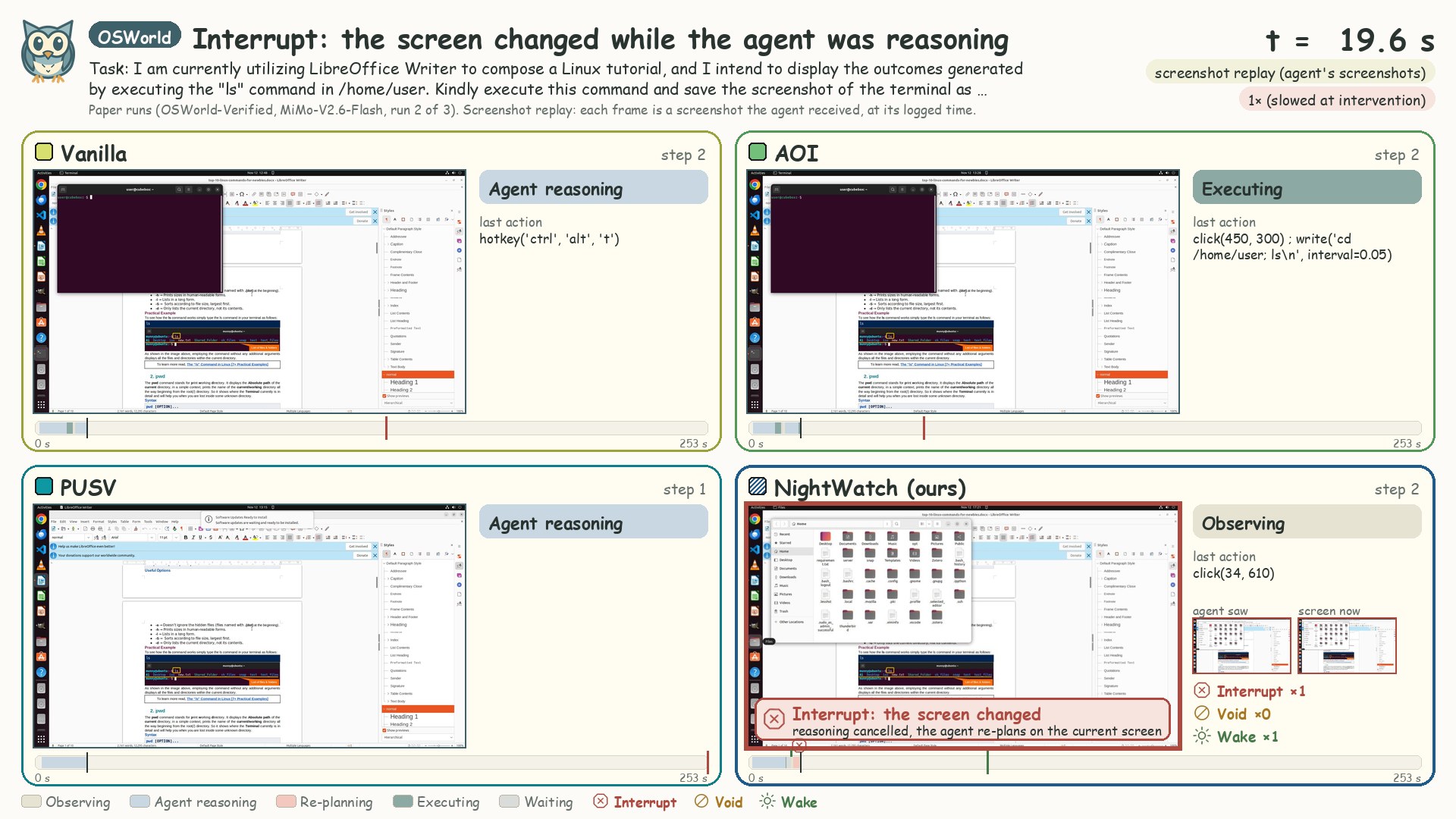
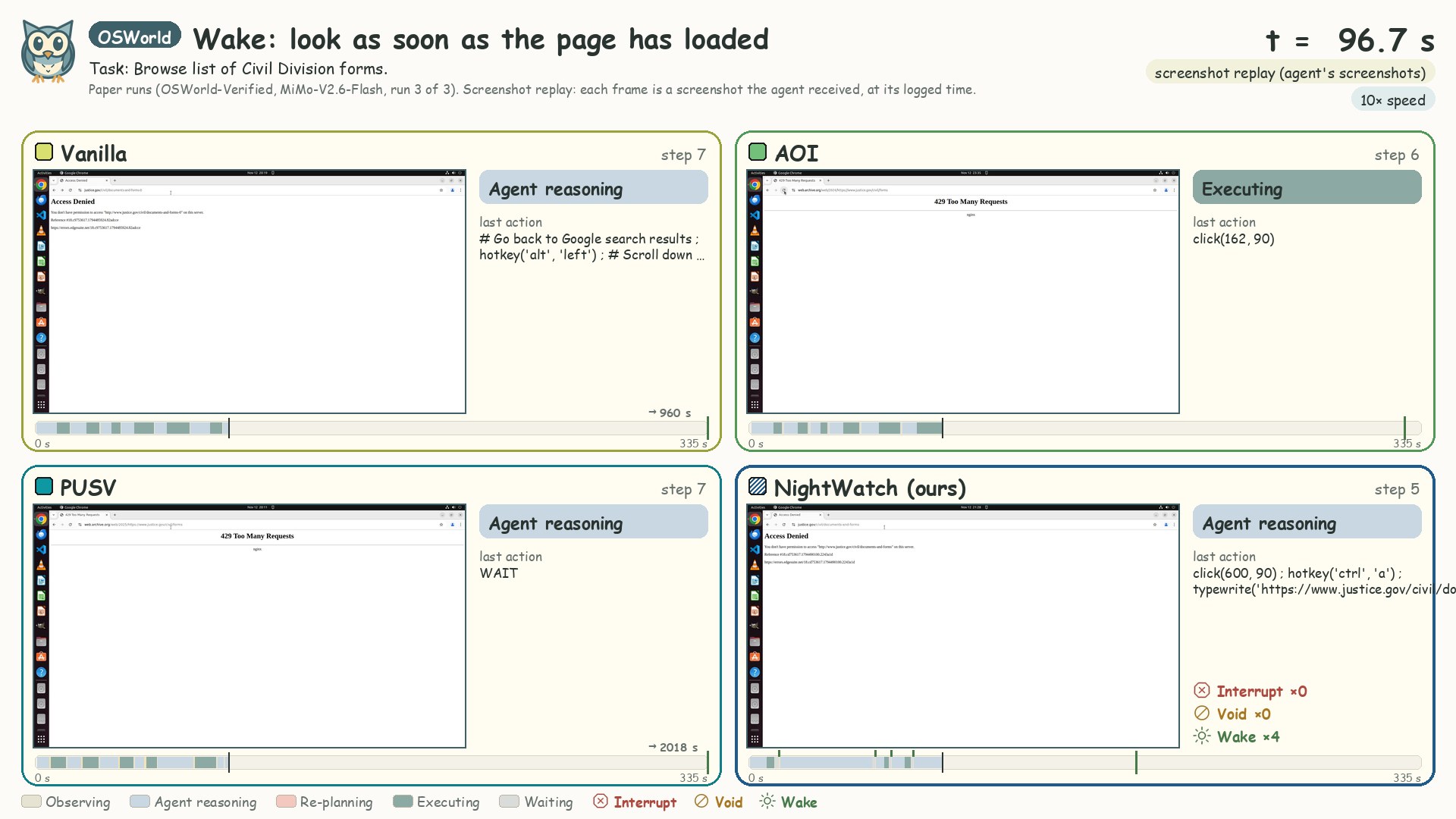
- It can interrupt outdated reasoning, cancel invalid actions, and wake the main AI the moment the screen is ready.
- On dynamic web tasks, NightWatch improved success rates from 39.5% to 44.2% using the same underlying AI agent.
- The framework works with any existing AI assistant without requiring changes to its programming or prompts.
The Problem With AI Assistants That Blink
Imagine trying to navigate a busy website with an assistant who only glances at your screen every few seconds, then works from memory while the page continues to change. This is exactly how today's AI computer assistants operate - and it causes constant mistakes and delays.
Think of it as giving your AI assistant a human-like ability to peripherally monitor the screen while working, rather than constantly looking away and back again.
The system works alongside any existing AI assistant without requiring changes to its programming, prompts, or capabilities. At its core is NightWatch-0.8B - a lightweight AI model specifically trained to monitor screen changes and answer simple questions about what's happening visually.
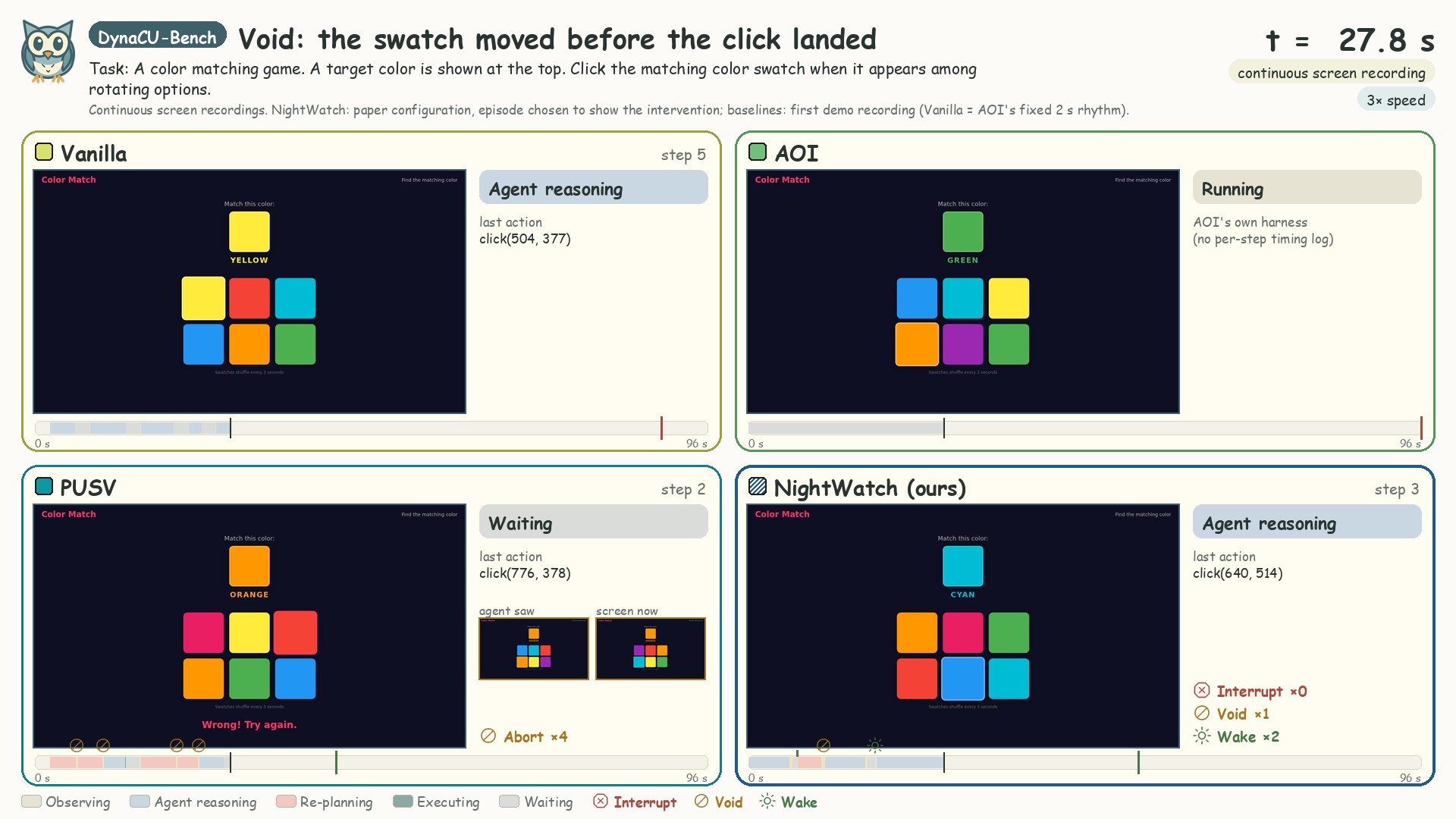
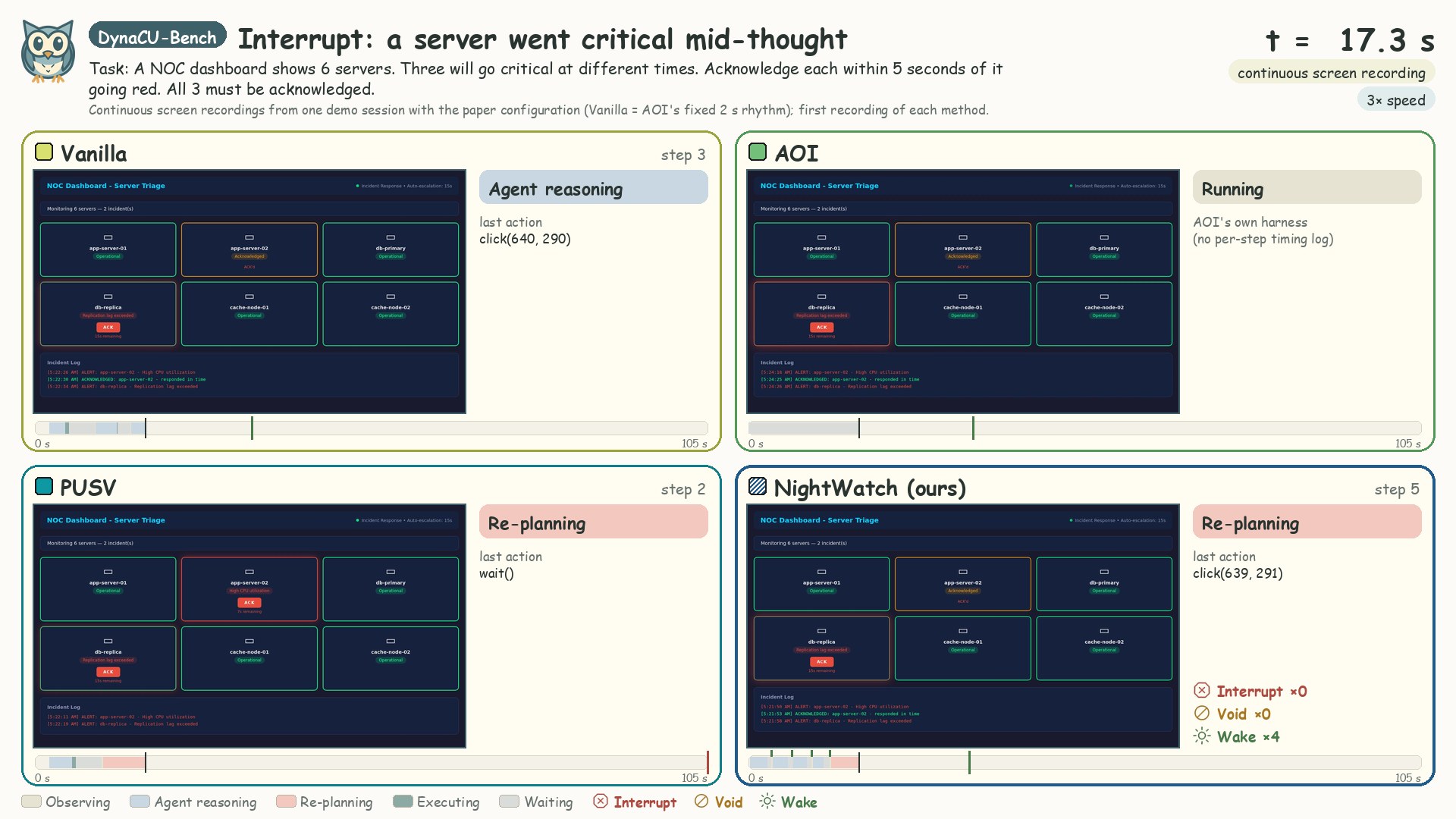
Interrupt - Stop the main AI's reasoning when the screen has changed enough to make its current thinking obsolete 2. Void - Cancel a pending action when its target is no longer valid or available 3. Wake - End waiting periods the moment the screen becomes ready for interaction
This approach represents a fundamental shift from time-triggered perception (looking at fixed intervals) to event-triggered perception (looking when something meaningful happens). The researchers call this "proactive perception" - letting the screen itself decide when the AI should pay attention rather than relying on predetermined timing.
How Does AI Watching Computer Screen Actually Work?
The NightWatch system operates through an elegant division of labor between two specialized components. The main AI assistant remains unchanged - it still handles the complex reasoning and decision-making about what actions to take. The NightWatch watcher focuses exclusively on monitoring the screen and making timing decisions.
This separation leverages the strengths of different types of AI systems. Large vision-language models excel at complex reasoning but are too slow and computationally expensive to run continuously. This makes it immediately applicable to current AI systems struggling with dynamic interfaces.
Concrete Results: Less Waiting, Fewer Mistakes
The research team tested NightWatch on two challenging benchmarks: OSWorld-Verified (desktop automation tasks) and DynaCU-Bench (dynamic web interactions). The results demonstrate significant improvements in both efficiency and reliability.
On desktop tasks, NightWatch reduced non-reasoning time (time spent waiting rather than thinking) by 33% and cut wasted time (time spent on premature observations or stale actions) by 53%. Remarkably, it achieved these efficiency gains while maintaining task success rates equivalent to the unmodified AI system.
On dynamic web tasks, where screens change frequently and unpredictably, NightWatch actually improved success rates. Using the same underlying AI agent, success increased from 39.5% to 44.2% - a substantial improvement in reliability simply from better timing of observations.
The system outperformed existing approaches like AOI (which samples frames between steps) and PUSV (which checks the screen once before dispatch). Perhaps most impressively, the tiny 0.8B parameter NightWatch watcher proved more effective than a System-1 decision model more than 30 times its size.

These results underscore a crucial insight from the research: "The timing of perception is as critical as its content." Even the most capable AI assistant will perform poorly if it's working from outdated information.
What This Means for Everyday Computer Use
For ordinary users, this technology could translate to AI assistants that work more like competent human assistants rather than clumsy automatons. Imagine:
- Web automation that actually works on modern dynamic websites without getting confused by loading animations or pop-ups
- Desktop assistants that can reliably navigate through multi-step processes without losing track of what's happening on screen
- Mobile AI helpers that adapt to notifications, screen rotations, and other unexpected changes without failing
- Accessibility tools that provide more reliable assistance for users with disabilities
The efficiency gains also matter practically. Reducing wasted time by 53% means tasks complete faster, saving both time and computational resources. For organizations deploying AI assistants at scale, this could significantly reduce operating costs.
The plug-and-play nature of NightWatch means these benefits could reach users relatively quickly, as the technology doesn't require rebuilding existing AI systems from scratch.
The Bigger Picture: Toward Continuous AI Awareness
NightWatch represents an important step toward AI systems that maintain continuous awareness of their environment rather than perceiving it in discrete, disconnected snapshots. This shift from periodic to continuous perception mirrors how humans interact with dynamic environments - we maintain ongoing awareness while focusing attention where it's needed.
This research connects to broader trends in AI development. At Sci Herald, we've covered related developments like AI that learns to act like people by watching videos and systems that learn to grab and move objects like humans.
Looking forward, the researchers acknowledge limitations in their current approach and scope. The system focuses on timing rather than improving the underlying capabilities of AI assistants, and there remain challenges in handling extremely complex or novel interface changes. However, the demonstration that timing awareness alone can yield significant improvements suggests substantial room for advancement in how AI systems perceive and interact with dynamic environments.
Paper, Code and Resources
- Paper: Don't Sleep, Keep Watch: Proactive Perception for Computer-Use Agents on arXiv (a preprint server; not yet peer reviewed)
- Code: SuJQ0722/NightWatch on GitHub
- Project page: sujq0722.github.io/NightWatch
- Discussion: Hugging Face Papers — 100 community upvotes as of November 26, 2026
Frequently Asked Questions
How is AI watching computer screen different from regular screen recording?
Regular screen recording simply captures what happens on screen, while NightWatch actively analyzes the screen in real-time to make decisions about when the main AI should pay attention. It's the difference between security camera footage and a security guard watching monitors - one passively records, while the other actively interprets and responds.
Could this technology be used to monitor employees without their knowledge?
The research focuses on assisting AI systems rather than monitoring humans. However, like any screen monitoring technology, ethical implementation would require transparency and consent. The paper describes a technical framework for improving AI efficiency, not a workplace monitoring solution.
Does NightWatch require special hardware or can it run on regular computers?
The system is designed to be computationally efficient. The main watcher model uses only 0.8 billion parameters, making it capable of running on standard hardware without specialized equipment. The efficiency gains might actually reduce overall computational requirements by eliminating wasted processing on outdated information.
How does this compare to existing AI assistants like Siri or Alexa?
Current consumer AI assistants typically operate through voice commands rather than screen interaction. NightWatch addresses a different problem - AI systems that actually navigate graphical interfaces. The technology could potentially enhance any AI that interacts with visual interfaces, including future versions of consumer assistants.
Could this make AI assistants too intrusive or interruptive?
The system is designed to reduce unnecessary interruptions by ensuring the AI only acts on current information. Rather than being more intrusive, it should make AI assistants more contextually appropriate in their timing - much like a human assistant who knows when to wait and when to act.
Source: Read the original study